Loading blog post...
Technology24 min read
Goodbye Frameworks, Hello Bundlers!
Frameworks grew complex, slow, and mentally expensive. Smart runtimes like Bun and Deno are flipping the stack - making tooling invisible, performance native, and development boring again.

Yeah! Developers are tired. Frameworks got heavier, builds got slower, and nobody wants to debug hydration boundaries on a Friday night!
For over a decade, the industry has operated under the hegemony of the Framework Era. As we approach the midpoint of the 2020s, A new paradigm is emerging, by the radical consolidation of capabilities in the infrastructure layer. This is the era of the Smart Runtime and the Super-Bundler.
A Decade of Bundling Wars
In the nascent stages of the web, JavaScript was a decorative scripting language, not an application platform. Bundling was a manual process of concatenating files in a specific order to ensure global variables were declared before they were accessed.
Webpack
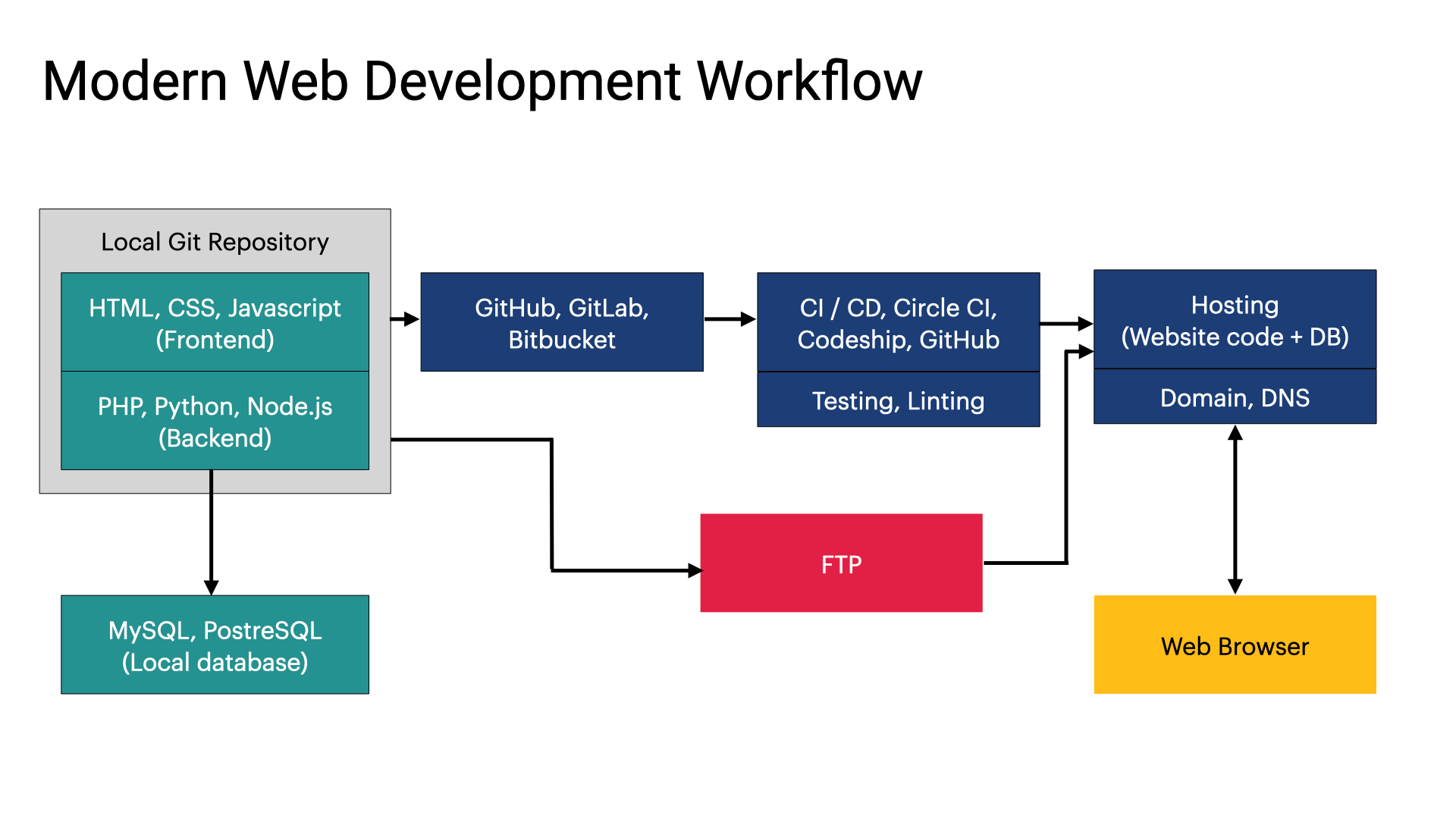
The release of Webpack marked the beginning of the "Enterprise Bundle" era. Webpack fundamentally changed the mental model of web development by treating everything as a module—not just JavaScript, but CSS, images, fonts, and HTML. Through its powerful loader system, Webpack allowed developers to import a .png file directly into a .js file, a concept that was revolutionary at the time. However, this power came at a steep price: complexity. You change one line of code, Webpack rebuilds like you just asked it to compute the weather for the next decade.
Webpack's dominance entrenched a culture of configuration over convention. A production-ready Webpack configuration file could easily span hundreds of lines, requiring intricate knowledge of loaders, plugins, and optimization flags. As applications scaled to thousands of modules, build times ballooned from seconds to minutes, severely degrading the developer feedback loop.
RollUp
As dissatisfaction with Webpack's complexity grew, alternative philosophies emerged. Rollup focused on the concept of tree-shaking, statically analyzing code to remove unused exports.
Parcel
Simultaneously, Parcel introduced the concept of zero-configuration. It attempted to infer the developer's intent without explicit config files, automating the setup of Babel, PostCSS, and other tools.
ESBuild & Vite
The true disruption arrived with ESBuild and Vite. ESBuild demonstrated that bundling tasks—minification, transpilation, and resolution—could be performed 10 to 100 times faster than JavaScript-based tools by leveraging parallelism and native machine code.
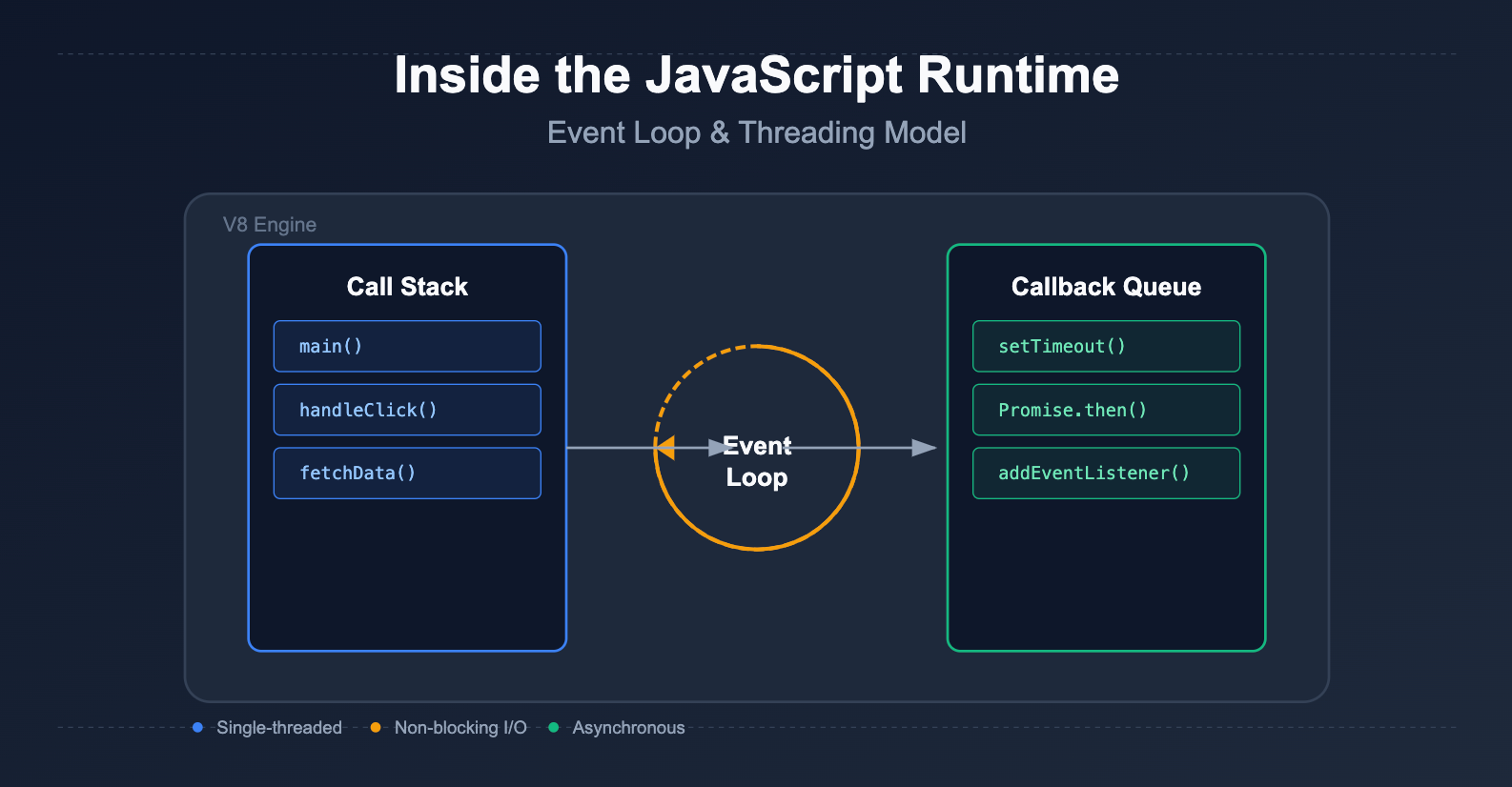
Vite leveraged ESBuild to solve the ‘dev server startup problem’. Instead of bundling the entire application before starting the server (the Webpack model), Vite served source files over native ES Modules (ESM), letting the browser handle the import graph. It only used ESBuild to pre-bundle dependencies (like React or Lodash) that rarely changed. Vite basically said: Why bundle during dev at all? Just send ESM to the browser. Result? Startup times dropped from minutes to milliseconds.
Table 1: The Evolution of Build Tool Architecture
Era | Primary Tool | Language | Architecture | Primary Pain Point |
Generation 1 | Browserify / Gulp | JavaScript | Stream-based concatenation |
When Frameworks Started Feeling Like Homework
Next.js, the undisputed leader of the React meta-framework market, exemplifies this trajectory. The transition from the "Pages Router" to the "App Router" in Next.js 13/14 introduced a radical shift in mental models. Next.js App Router made half the community feel like interns again! And concepts such as React Server Components (RSC), streaming hydration, and granular caching boundaries were forced upon developers. While technically impressive, these features increased the complexity of building simple applications. Developers were no longer just writing React, they were writing Next.js-flavored React!
The complexity extends to the "Black Box" problem. Modern frameworks abstract critical infrastructure layers, such as caching and routing. When these abstractions fail or behave unexpectedly, developers are left stranded without clear debugging paths.
Framework Fatigue Is Real And Devs Are Done Pretending
Sometimes, node_modules grow so big it needs its own zip code! These Meta-Frameworks have grown so large that they have begun to collapse under their own weight, leading to a phenomenon known as "Framework Fatigue".
The constant churn of frameworks - from Angular to React, from Redux to Zustand, from Webpack to Vite, from Pages to App Router - has tangible human costs. 70% of developers have experienced burnout, with "ecosystem churn" cited as a primary stressor. This fatigue is driving a counter-movement: a desire for simplicity, stability, and "boring" technology.
Invisible Tooling
"Invisible Tooling" refers to infrastructure that requires zero configuration and zero mental overhead. It is the antithesis of the webpack.config.js file. In an ideal "invisible" setup, the developer writes standard TypeScript code, and the runtime automatically handles transpilation, dependency resolution, and execution. There are no build steps, no distinct "dev" vs "prod" modes that behave differently, and no complex plugin chains.
The shift is from explicit configuration (telling the tool how to do its job) to implicit convention (the tool knows what to do). This is the promise of the new generation of runtimes: the toolchain disappears, leaving only the code.
The Rise of Smarts: Bun and Deno
The "Hello Bundlers" movement is technically enabled by the emergence of "Smart Runtimes." Unlike Node.js, which was designed primarily as a runtime for JavaScript execution, these new entrants - Bun and Deno are designed as complete development ecosystems. They are not just runtimes, they are bundlers, test runners, and package managers wrapped in a single binary. Once developers realized frameworks weren’t the problem, the runtime was, the race to build a faster, smarter base layer began.
Deno
Ryan Dahl, the creator of Node.js, released Deno to address his misses about Node. Deno is built on V8 and Rust. Its core innovations included:
Security by Default: No file, network, or environment access unless explicitly granted.
No node_modules: Dependencies are imported directly via URLs, decentralizing the package registry model.
Native TypeScript: No build step required to run .ts files.
Standard Library: A robust set of verified standard modules modelled after Go’s standard library.
While Deno succeeded in proving the value of an integrated toolchain, its initial refusal to support npm packages slowed its adoption. It has since pivoted to support npm, bridging the gap between purity and pragmatism.
Bun
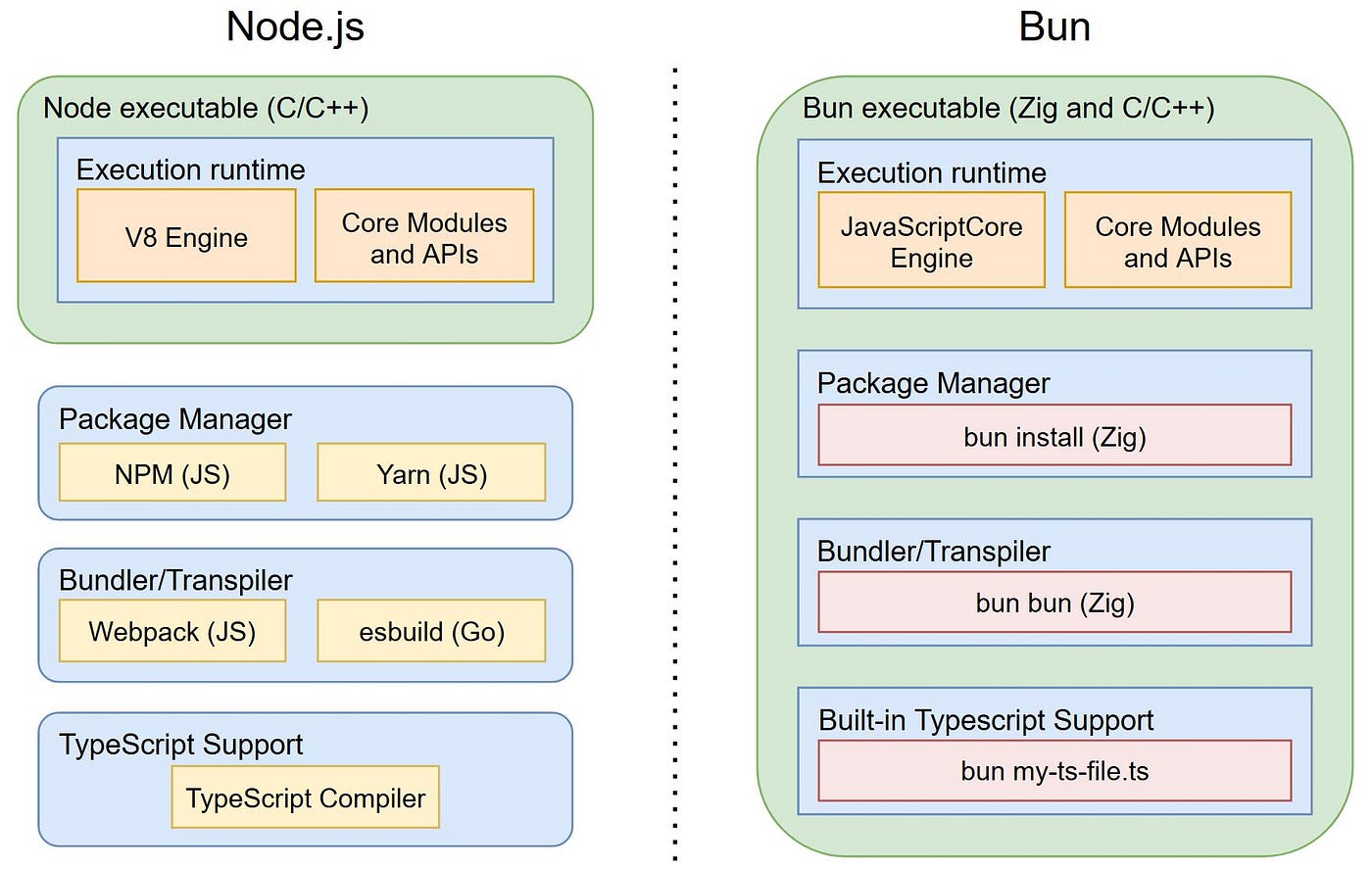
Bun represents the most aggressive challenge to the status quo. Written in Zig and built on Apple's JavaScriptCore (JSC) engine, Bun prioritizes performance above all else. Its philosophy is simple: replace the entire chaotic JavaScript toolchain with a single, ultra-fast executable.
V8 vs. JavaScriptCore
The choice of engine is critical. V8 is optimized for high-throughput JIT compilation, ideal for long-running browser sessions. JavaScriptCore (Bun) is optimized for faster startup times and lower memory footprint, characteristics originally tuned for Safari on mobile devices.
The SQLite Performance Gap
The "Hello Bundlers" era also sees runtimes absorbing database drivers. Bun includes a native SQLite driver (bun:sqlite) that bypasses the overhead of the V8 C++ bridge used by Node.js libraries.
Performance: bun:sqlite is benchmarked at 3-6x faster than Node's better-sqlite3 for read queries.
Node's Response: Recognizing this threat, Node.js recently introduced a native node:sqlite module to close the gap. This reactionary move underscores the pressure Node.js faces from newer entrants.
The Integrated Toolchain
Bun is not just a runtime; it is a replacement for:
npm/yarn/pnpm: bun install is faster due to a global binary cache and optimized syscalls.
Jest/Vitest: bun test is a native test runner that boots instantly.
Webpack/Rollup: Bun.build is a native bundler.
Transpilers: Bun runs .ts and .jsx files natively.
This integration reduces the "context switching" overhead for the machine. In a Node.js stack, running a test involves: npm invoking a shell, shell invoking Jest, Jest invoking Babel to transpile, Babel parsing AST, Jest creating a virtual sandbox, and finally running the test. In Bun, the runtime simply loads the file and executes it.
Cold Starts in Serverless
In serverless environments (e.g., AWS Lambda, Cloudflare Workers, Vercel Functions), "cold start" latency is the enemy. It is the delay a user experiences when a function must boot up to handle a request after a period of inactivity.
Node.js: Often suffers from 200ms - 500ms cold starts due to the overhead of booting the V8 engine and parsing the large dependency graph of frameworks like Next.js.
Bun: Designed for instant startup. Internal testing by Vercel showed that switching to the Bun runtime reduced average latency by 28% in CPU-bound rendering workloads.
Deno: Platforms like Deno Deploy and Cloudflare Workers leverage "Isolates" (lightweight contexts) rather than full containers, achieving sub-10ms startup times, but often require specific architectural patterns (like Hono or Fresh) to fully utilize this speed.
From Heavy Frameworks to Islands Architecture
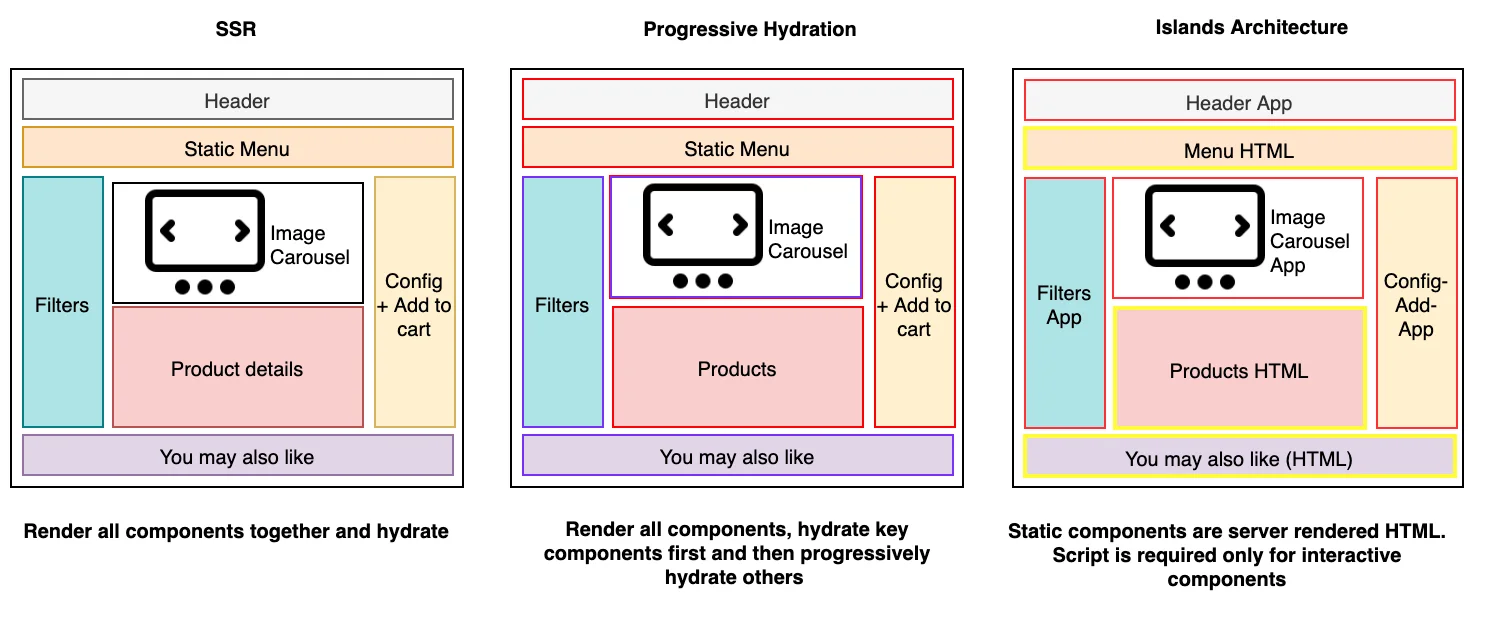
The shift in tooling facilitates a shift in application architecture. We are moving away from the "Hydrate Everything" model of Next.js toward more efficient patterns like "Islands Architecture" and "Standard-based Micro-frameworks."
Deno Fresh
Fresh, the web framework for Deno, champions the Islands Architecture to solve the problem of excessive JavaScript payloads.
The problem it solved
In a typical Next.js application, the entire React tree is hydrated on the client. Even static elements like headers and footers are part of the hydration process, requiring JavaScript execution and memory usage.
The Solution
Fresh renders the page as pure static HTML on the server. No JavaScript is sent to the client by default. Developers explicitly mark interactive components (e.g., a "Buy" button or a carousel) as "Islands." During rendering, Fresh isolates these components and generates a dedicated, tiny JavaScript bundle for them. The client browser only hydrates these specific islands, leaving the rest of the page as static HTML. This leads to zero runtime overhead for static content and significantly faster Time to Interactive (TTI), as the browser is not blocked by hydrating a massive DOM tree.
Hono
Hono has emerged as the standard-bearer for the "Goodbye Frameworks" movement on the backend. Unlike Express, which relies on Node-specific req and res objects, Hono is built on Web Standards (the Request and Response API defined by the Fetch standard).
Portability: Because it adheres to standards, a Hono application can run unmodified on Cloudflare Workers, Bun, Deno, Vercel Edge, and Node.js. It decouples the application logic from the underlying runtime.
Performance: Hono is ultra-lightweight (under 14kB) and uses a highly optimized RegExpRouter. When combined with Bun.serve, it provides a backend stack that is simpler, faster, and cheaper to host than a full Next.js API route implementation.
Developer Experience: Hono provides first-class TypeScript support without complex build steps, allowing developers to define typed APIs that are automatically validated.
Table 2: Comparison of Backend Architectures
The Developer’s Shift from Specialists to Generalists
The "Framework Era" encouraged hyper-specialization. Companies hired "React Developers" or "Next.js Experts." As tools like Hono and Bun converge on Web Standards (Fetch API, standard Request/Response), the knowledge becomes transferable.
The Compatibility Moat
Node.js possesses a formidable defensive moat: the npm ecosystem. With over two million packages, Node.js is the gravitational center of JavaScript. Any runtime that breaks compatibility with npm faces an uphill battle.
Bun's Strategy: Bun's primary strategy is "radical compatibility." By implementing Node's internal APIs (like fs, path, http), Bun aims to be a drop-in replacement. However, compatibility is a moving target. Edge cases in low-level libraries (cryptography, image processing) remain a friction point for enterprise adoption.
Deno's Pivot: Deno's initial rejection of npm was a strategic error that it has since corrected. By adding npm compatibility, Deno acknowledges that the "moat" cannot be ignored, even if its own "url import" model is theoretically superior.
Corporate Interests and the "Edge"
The Runtime War is fueled by the cloud providers.
Cloudflare: heavily invested in the "Edge" model (Workers). They support standard-based frameworks like Hono because their infrastructure (Workers runtime) is not Node.js-based. They benefit from the move away from heavy Node meta-frameworks.
Vercel: Heavily invested in Next.js and the Node.js ecosystem. However, even Vercel is hedging its bets by introducing support for Bun in its functions and optimizing Turbopack (Rust-based) to compete with Vite.
Oven (Bun): As a VC-backed startup, Bun must prove that its runtime is stable enough for production. Its business model likely hinges on providing specialized hosting/infrastructure that leverages Bun's unique capabilities (similar to Deno Deploy).
So, We are bidding Goodbye to the monolithic, Hello to a new generation of Bundlers and Smart Runtimes that expose the raw power of the web platform with unprecedented speed and efficiency.
This shift is characterized by:
Consolidation: The collapsing of disparate tools (test, build, run) into single, high-performance binaries (Bun, Deno).
Invisibility: The disappearance of configuration files and the expectation that tools should "just work."
Standardization: A move toward Web Standards (Request/Response) over framework-specific APIs, reducing vendor lock-in.
Performance: A rejection of the "slow is okay" mentality, driven by the economic realities of the cloud and the psychological needs of developers.
Frameworks ruled the last decade. Runtimes will rule the next one.